Key Highlights |
|---|
| ◉ The Mundeshwari Devi Temple is one of Indias most distinctive ancient Hindu temples. |
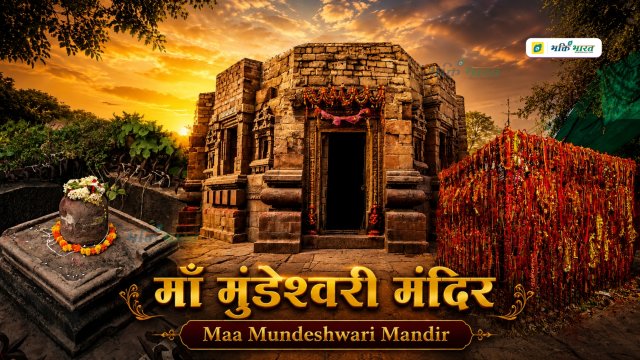
| ◉ This temple is known for its octagonal architecture. |
| ◉ A Panchmukhi Shivling is installed in the center of the temples sanctum sanctorum. |
The Mundeshwari Devi Temple is an ancient Hindu temple situated on Mundeshwari Hill in the Kaimur district of Bihar, India. The temple is primarily dedicated to Mata Mundeshwari (Shakti) and Bhagwan Shiva. It is located at an elevation of approximately 600 to 608 feet above the surrounding area.
How to reach Mundeshwari Temple
Mundeshwari Temple remains open throughout the week, with visiting hours from 6:00 AM to 7:00 PM.
Major Festivals of Mundeshwari Temple
Navratri, Mahashivratri, and Ram Navami are the major festivals celebrated at the Mundeshwari Temple. A unique tradition associated with the temple involves offering animals without bloodshed; a goat may be offered to the Goddess as part of a ritual, but it is not killed.
How to Reach Mundeshwari Temple
Mundeshwari Temple is situated on Mundeshwari Hill (also known as Paunra or Pivara Hill) near Ramgarh in the Kaimur district of Bihar. Bhabua Road Railway Station (Mohania) is a convenient railway station for reaching the temple; from there, one can travel to the temple by taxi or local transport. Patna Airport is the nearest airport.
The Mundeshwari Devi Temple is one of India's most significant ancient Hindu temples. The temple houses the idol of Goddess Mundeshwari and a shrine dedicated to Lord Shiva, reflecting the importance of both Shakti and Shaiva worship at this site. Renowned for its octagonal architecture, the temple is often considered one of the oldest Hindu temples in India where worship has continued uninterrupted for centuries.
A Panchamukhi Shivling is installed in the center of the temple's sanctum sanctorum. A magnificent idol of Goddess Mundeshwari resides in the eastern niche. Additionally, idols of Ganesha, Surya, and Vishnu are also present here.
The temple is traditionally believed to date back to 108 AD. It has been protected as an ASI monument since 1915. One of its most distinctive features is its rare octagonal structure. The temple is also considered an early example of Nagara-style temple architecture.
6 AM - 7 PM

 Follow Bhakti Bharat Whatsapp Channel »
** Please write your any type of feedback or suggestion(s) on our contact us page. Whatever you think, (+) or (-) doesn't metter!

शनिचरा मंदिर @Morena, Madhya Pradesh

पशुपतिनाथ मंदिर मंदसौर @Mandsaur, Madhya Pradesh
श्री राम मंदिर, शिकोहाबाद @Shikohabad, Uttar Pradesh