Key Highlights |
|---|
| ◉ Triloknath holds a significant place in the Buddhist religious landscape of Lahaul. |
| ◉ It stands as a living symbol of the cultural and spiritual history of the Himalayas. |
| ◉ Originally known as Tunda Vihar this site was established by Guru Padmasambhava. |
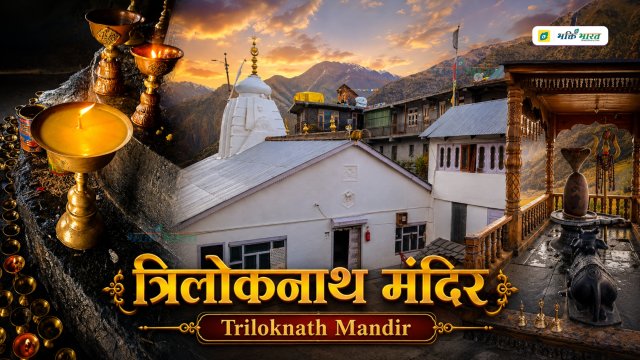
The Triloknath Temple is a very ancient and sacred temple located in the village of Tunde in the Lahaul region of Himachal Pradesh. It holds great spiritual significance for both Hindus and Buddhists, making it a vital symbol of shared faith in the Himalayan region. The temple is dedicated to Lord Triloknath, a name that translates to 'Lord of the Three Worlds'. This temple is a significant pilgrimage site for devotees from Himachal Pradesh, Ladakh, and other Himalayan regions. Photography is prohibited inside the temple's sanctum sanctorum, but it is permitted within the temple complex.
Trilokinath Temple, Tunde: Darshan Timings
The temple remains open throughout the week, and the timings for darshan are from 6:00 AM to 8:00 PM.
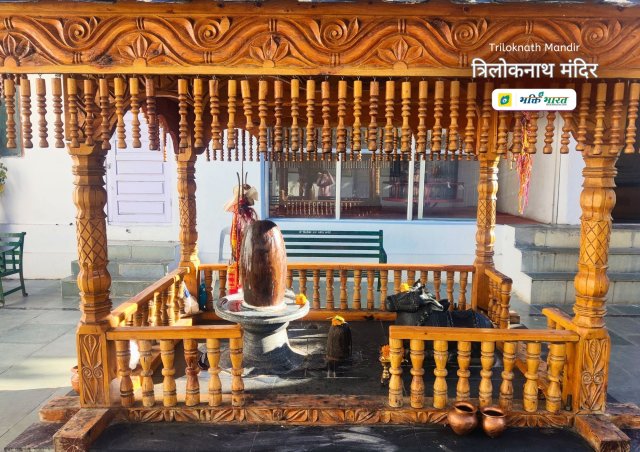
Lord Shiva is worshipped at the Triloknath Temple, while Buddhists revere the deity as Avalokiteshvara (Chenrezig), the Bodhisattva of Compassion. It is situated in the beautiful Chenab Valley amidst Himalayan vistas. The temple is known for the confluence of Hindu and Buddhist traditions. It was constructed in the late 9th or early 10th century.
Triloknath Temple is also historically known as 'Tunda Vihar'. Official records from the Himachal Tourism Department mention a sacred six-armed idol and highlight the temple's special association with Avalokiteshvara. According to another official account, this statue was installed by Guru Padmasambhava, a highly revered figure in Himalayan Buddhism.
One of the most intriguing local legends here revolves around the miraculous appearance of the deity. A lake once existed near the site of the present-day 'Hinsa Nala'. This lake was associated with a mysterious, sacred power and was known in Tibetan tradition as 'Ome-Cho', meaning \"Sea of Milk\".
According to legend, seven mysterious creatures emerged from the lake and drank the milk of cows grazing nearby. One day, a local shepherd boy named Tundu captured one of these creatures and began leading it towards the village. It is said that the captured creature miraculously transformed into a marble idol of the deity, which was subsequently installed in the Triloknath Temple and worshipped.
According to another popular legend, this temple was constructed by a supernatural entity known to the locals as 'Mahadanav'—a powerful demon. The temple was completed in a single night with the aid of this supernatural force. Such stories are common in the sacred traditions of the Himalayas, where ancient temples are often linked to supernatural builders, divine powers, or miraculous events.
The Pauri Fair (Trilokinath Fair) is a significant annual religious festival at this temple. During the festival, local traditions include a ceremonial procession featuring the sacred horse of Trilokinath, and devotees participate in rituals involving holy water and customs associated with the surrounding areas. It is held annually in August, alongside regional festivals such as 'Halda' in February and 'Fagli' in March. People from both Hindu and Buddhist traditions participate in these celebrations, further reinforcing the temple's identity as a shared center of faith.
The Trilokinath Temple is located in Trilokinath village—historically known as Tunda Vihar—within the Udaipur sub-division of the Lahaul and Spiti district in Himachal Pradesh. The temple is accessible by road from major hubs such as Manali, Keylong, and Udaipur. Pathankot Junction is the nearest railway station. The closest airport is Bhuntar Airport near Kullu, located approximately 218 km from Triloknath Temple. From Bhuntar, travelers can proceed towards Manali and then enter the Lahaul region by road.
Shiv Pariwar
6 AM - 8 PM

 Follow Bhakti Bharat Whatsapp Channel »
** Please write your any type of feedback or suggestion(s) on our contact us page. Whatever you think, (+) or (-) doesn't metter!

महालक्ष्मी मंदिर, पुणे @Pune, Maharashtra

अन्नपूर्णा मंदिर, इंदौर @Indore, Madhya Pradesh
चित्तरंजन पार्क काली मंदिर @Delhi, New Delhi