Shri Krishna Bhajan
Make Bhakti Bharat Your Preferred Source on Google

Authentic way to donate/contribute for Ram Mandir Ayodhya (राम मंदिर अयोध्या के लिए दान/योगदान का प्रामाणिक तरीका)

Authentic way to donate/contribute for Ram Mandir Ayodhya
In Ayodhya after Bhoomi Pujan of Shri Ram Janmbhoomi by Hon'ble Prime Minister, the work for construction of a Bhavya and Divya Shri Ram Mandir has finally commenced. Now Bhakts can contribute wholeheartedly to the cause.
Shri Ram Janmbhoomi Teerth Khestra urged devotees to make donation to the trust for construction of Ram mandir in Ayodhya.

If you donate in the construction of Ram temple, then it can be used to collect tax. The government has announced tax exemption in the financial year 2020-21 on donation to Ram Janmabhoomi Tirtha Kshetra Trust. This trust has been formed on the order of the Supreme Court for the construction of Ram temple in Ayodhya.

The Central Board of Direct Taxes (CBDT) issued a notification stating that donations will be exempt from tax under section 80G as the trust is building a place of historical importance.

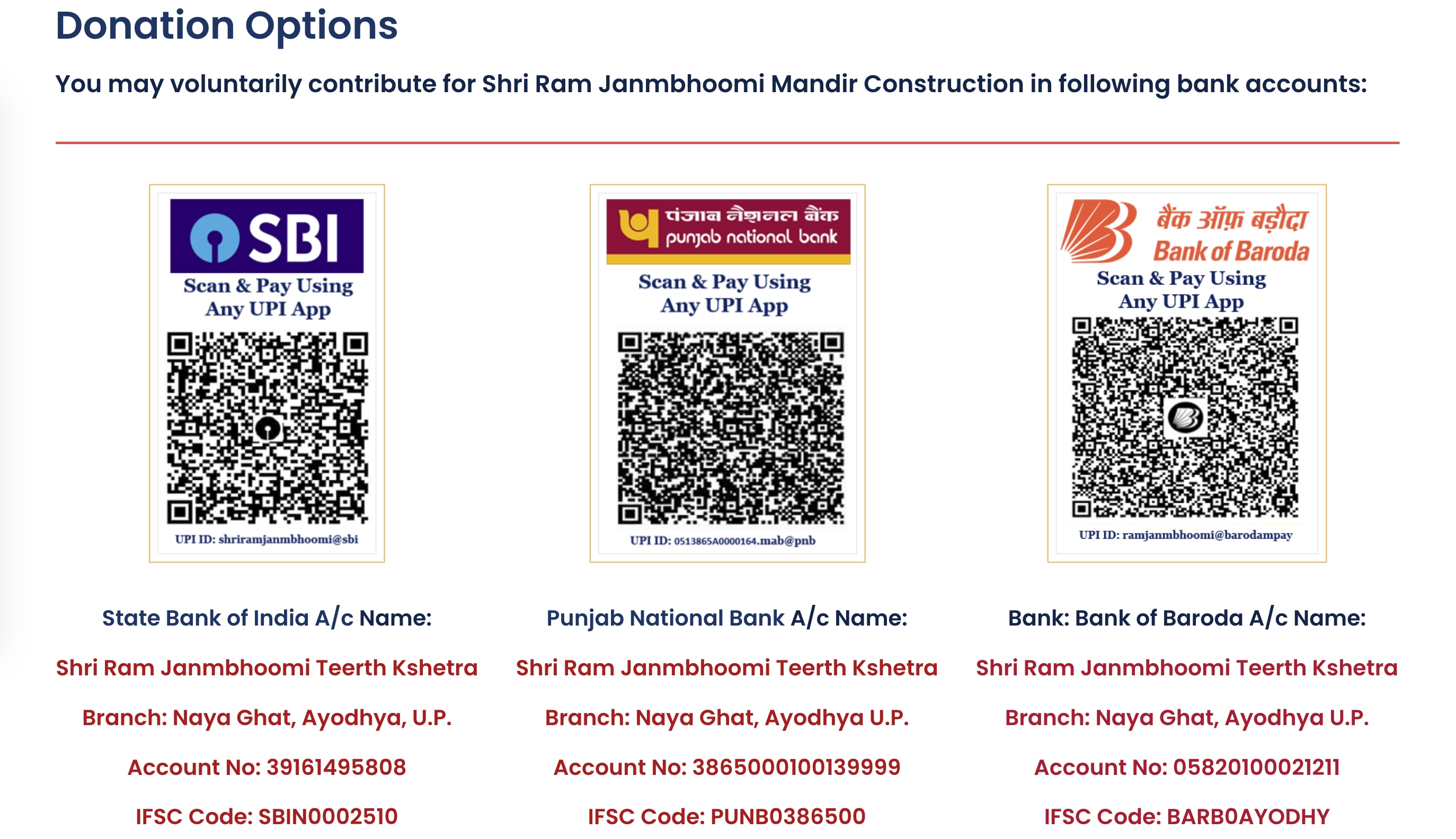
Here's how you can donate: Bank account set up by trust for the donations.
Bank: State Bank of India.
Branch: Naya Ghat Road, Ayodhya, Uttar Pradesh 224123.

PAN Number: AAZTS6197B

For Cash Deposit:
Current Account: 39161498809.

Cheque Deposit/ Online Transfer:
Saving Account: 39161495808
IFSC CODE: SBIN0002510

Direct Online Transfer: https://srjbtkshetra.org/donate/
Other Direct Transfer Options: https://srjbtkshetra.org/donation-options/

राम मंदिर अयोध्या के लिए दान/योगदान का प्रामाणिक तरीका हिन्दी में पढ़ें

राम मंदिर के लिए कैसे सहयोग करें? कैसे दान करें? कहाँ दान दें? सभी ऑप्षन्स को जानें!
 
 
Read Also

Blogs Donation BlogsDaan BlogsShri Ram Janmbhoomi BlogsRam Mandir BlogsAyodhya Blogs

If you love this blogs please like, share or comment!

Whatsapp ChannelFollow Bhakti Bharat Whatsapp Channel »
Bookmark / Save this blogs for future Add To Favorites
* Please share any of your suggestions or ideas with us.

** Please write your any type of feedback or suggestion(s) on our contact us page. Whatever you think, (+) or (-) doesn't metter!

Latest Blogs ›

What Is Tulabharam, How to Do Tulabharam

Tulabharam and Tulabhara also known as Tula-Daan is an ancient Hindu practice. It is an ancient ritual. Tulabharam is prevalent from the Dwapar era. Thulabharam means that a person is made to sit on one side of the scales and equal quantities of rice, oil, gold or silver or grain, flowers, jaggery etc. are weighed and offered to the Lord, according to the capacity of the person.

Holi Specials

Let's know! Some special information, Aarti and Bhajan quick (quick) links related to Holi festival…

What is Khatu Shyam Nishan Yatra?

Nishan Yatra is a kind of foot march, lifting Shri Shyam flag in hand and offering it to Shyam Baba, Khatu Shyam ji comes to the temple.

Is Rang Mahotsav Holi famous in foreign countries?

Holi has become increasingly popular outside India - in large part due to the millions of Sanatan followers around the world. Like Diwali, another Indian festival, communities with South Asian heritage living abroad often gather to celebrate Holi.

What is a Gandhar in Jainism?

The Jain flag is important in Jainism and serves as a symbol of unity for its followers. The Jain flag is hoisted atop the main spire of the temple during various ceremonies.

Rudraksha

Rudraksha is a sacred seed traditionally used in Hinduism and associated especially with Shiva. The word Rudraksha comes from two Sanskrit words: Rudra – a name of Lord Shiva and Aksha – meaning tears.

Kalpwas

People spend Kalpwas by staying on the Sangam banks of Prayag for a month. This tradition has been going on for centuries. ‘Kalpwas’ is a vrat which is observed on the banks of pilgrimage sites like Prayag.

Hanuman Chalisa - Hanuman Chalisa
Bhakti Bharat APP